

Why Saving Money Feels Impossible, and the One Rule That Fixes It
Saving fails because it has no payoff today. The behavioral fix is making progress visible, plus one simple rule that turns saving into momentum.

If you’ve ever set out to save money, meant it completely, and still ended the month with nothing set aside, this isn’t a willpower problem. It’s a design problem. And once you see it, it’s surprisingly fixable.
Here’s the trap. Almost everything else you do gives you feedback. Finish a workout, you feel it. Clean a room, you see it. But saving money? You move it somewhere, nothing visibly changes, and the reward, security, freedom, a goal met, sits months away. You’re being asked to do something mildly uncomfortable today for a payoff you won’t feel for a long time. Of course it loses to the coffee, the takeaway, the small thing you can enjoy right now.
So the real question isn’t “how do I find more discipline?” It’s “how do I make saving feel like it’s working today?”
Saving is a delayed-reward behavior in an instant-reward world
Behavioral economists call it discounting the future: a reward you’ll feel now beats a bigger reward you’ll feel later, even when later is clearly smarter. Saving is the purest example, all cost now, all benefit later. Which is exactly why “just save more” is useless advice. You already know you should. The behavior simply has no immediate payoff, so it never competes with the things that do.
The solution follows directly: if you can’t move the reward closer, you have to manufacture one. You make the act of saving feel good in the moment it happens.
What actually changes it: visible progress
In a field study, researchers gave two groups the same savings goal, one with a plain tracker, one with a game-like tracker that showed visible progress. The group that could see their progress was more likely to reach the goal. Same money, same target; the only difference was visibility.
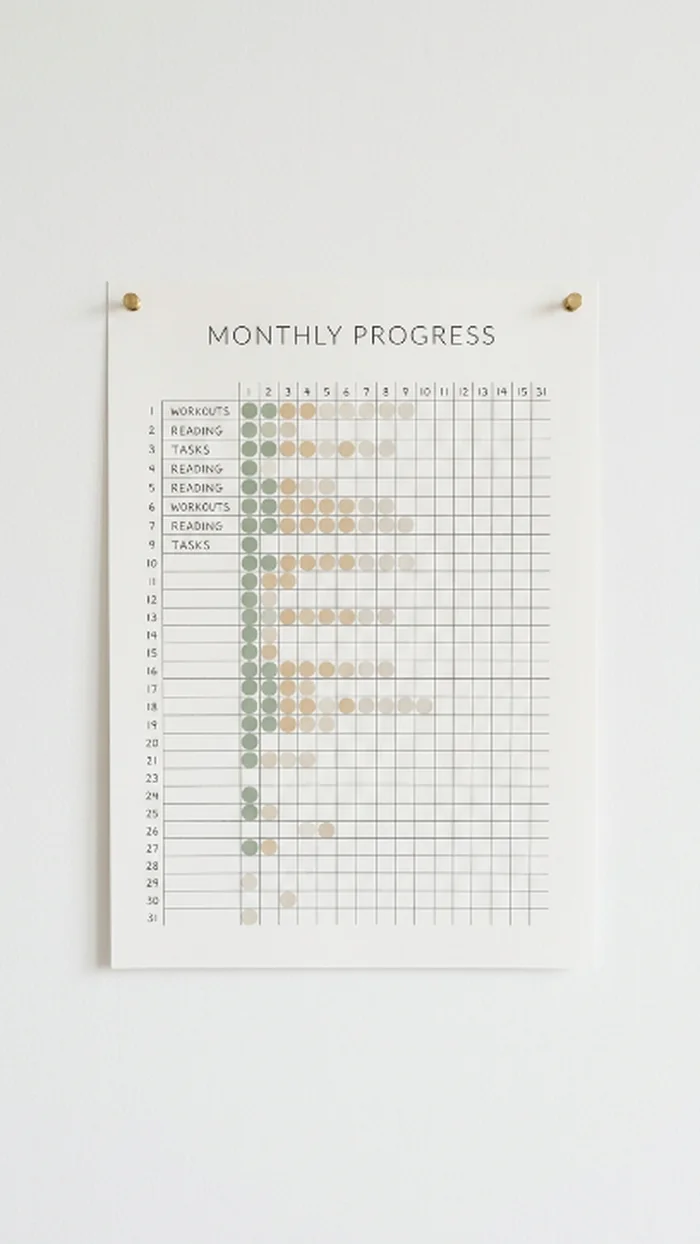
This is the engine behind every viral savings challenge, the envelope grids, the colored-in trackers. They’re not gimmicks. They solve the exact design flaw we started with by giving saving an immediate, visible reward. Every filled square is a small hit of “it’s working” that a bare bank transfer never gives you.
The one rule that makes it real
But visible progress only works if it’s honest, and this is where people sabotage themselves. There’s a difference between marking progress because you plan to save and marking it because the money has actually moved. The first feels productive but builds nothing. The rule:
Mark the progress only after the money has genuinely moved somewhere you’ve chosen to keep it.
Call it the stash rule. A deposit becomes real the moment it leaves your everyday spending and lands somewhere separate, a savings account, a cash envelope, a digital wallet. Intentions don’t get marked. Deposits do. It sounds too small to matter; it’s the entire thing. Now every mark is backed by money that exists, so your visible progress is true progress, and earned satisfaction is what trains the habit to stick.
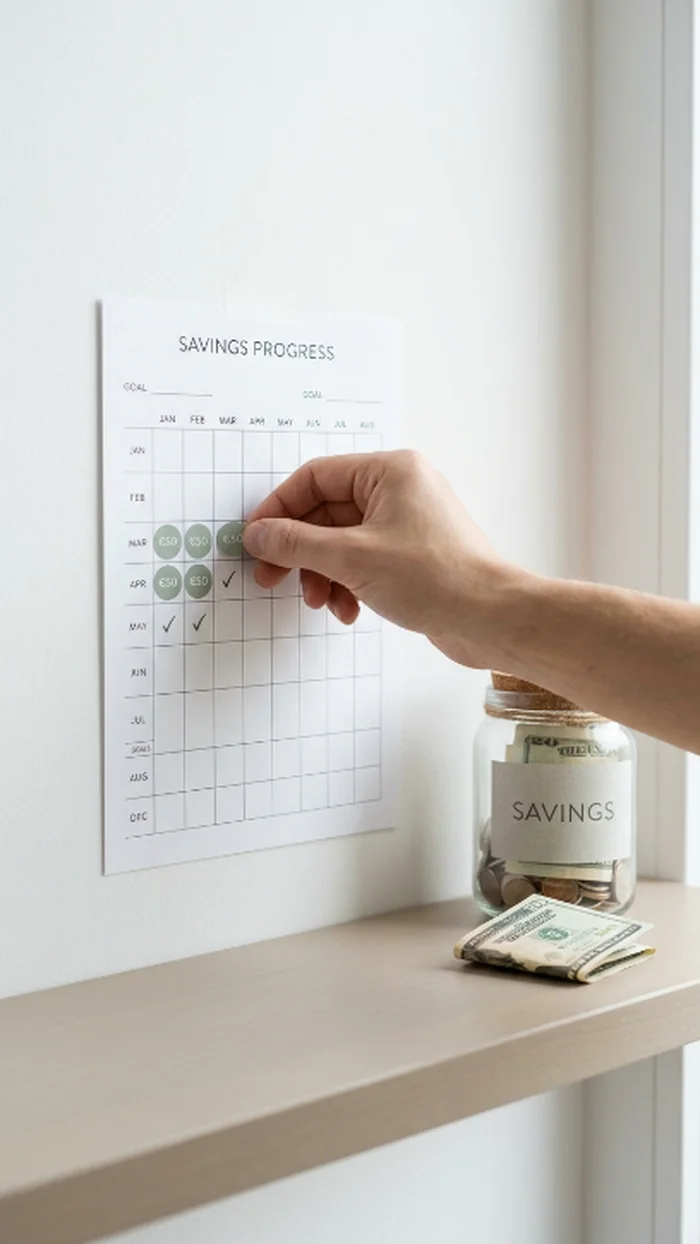
If you want a ready-made place to run that first month, the free One-Month Money Reset Kit gives every deposit somewhere visible to land.
Why “separate” matters
We treat money differently depending on where it lives. A dollar in your everyday account feels spendable; the same dollar in a labeled “emergency fund” feels off-limits. That’s a quirk you can use on purpose, give your savings its own home and its own name, and it stops feeling available, so it stops getting spent. The full move is four words: goal, home, deposit, mark.
Put it into practice
You need three decisions and a way to see progress: name one specific goal (not “save more”, “$500 starter cushion”), give it a separate home, and make saving visible with a tracker or grid. Then make one honest deposit, mark it, and repeat.
Keep the system itself simple: choose a goal, pick where the money lives, and mark each deposit only once it’s truly moved. That turns “make it visible, keep it honest” into something you can start today. For the wider picture, our 50/30/20 guide and ways to save money fast pair naturally with it.
Free kit
Want a ready-made place to make it visible? The free One-Month Money Reset Kit gives you a tracker built for exactly this rule.
One calm next step
You were never bad at saving. You were running a delayed-reward behavior with no reward, a setup almost no one wins. So change the setup: pick one goal, give it a home, make each real deposit something you can see, and mark the win only when the money has truly moved. Saving stops feeling like a test of willpower and starts feeling like momentum, built one honest deposit at a time.
Found this useful?
Pin it to come back to laterKeep reading
A few useful next steps

Budgeting Apps in 2026: Do You Need One, or Just a Better System?
Searches for budgeting apps exploded since Mint shut down. An honest look at what apps actually solve, what they do not, and how to tell if you need one.

Loud Budgeting: How to Say "That's Not in My Budget" Without the Awkwardness
What is loud budgeting? The meaning, real examples, and simple 'not in my budget' scripts to say no to spending without awkwardness or shame.

Why Every Budget You've Tried Has Failed (and the Fix That Sticks)
Budgets do not fail at the math. They fail when one bad week feels like a broken month, so you quit. The honest reason, and the forgiving fix that lasts.