

The 50/30/20 Budget Rule, Explained Simply
The 50/30/20 budget rule explained with examples at three incomes: 50% needs, 30% wants, 20% savings. Calculate yours and adjust it when rent is high.
If you want a budget but spreadsheets make your eyes glaze over, the 50/30/20 rule is the easiest place to start. It is one simple split, no forty categories, and you can set it up in the time it takes to make tea.
Here is the whole rule, what each part actually means, and the honest bit about when it needs adjusting, because for a lot of people it does. If three buckets still feels too vague to act on, a five-category beginner budget breaks the same idea down further.
The short answer
Split your take-home pay 50% needs, 30% wants, 20% savings and debt. On $3,500 a month that is $1,750, $1,050 and $700. Adjust the percentages before you abandon the method, because the split is a starting point, not a rule you can fail.
The rule in one line
Take your take-home pay, the money that actually lands in your account, and split it three ways:
- 50% to needs. The things you genuinely have to pay.
- 30% to wants. The things that make life feel like yours.
- 20% to your future. Savings and debt payoff.
That is it. No tracking every coffee. Three buckets, three percentages.
What it looks like at three incomes
Percentages are easy to nod along to and hard to picture. Here is the same split at three take-home figures.
| Bucket | Monthly | What it covers |
|---|---|---|
| Needs (50%) | $1,250 | Rent, utilities, groceries, transport, minimums |
| Wants (30%) | $750 | Eating out, subscriptions, hobbies, gifts |
| Future (20%) | $500 | Savings, extra debt payments |
At this income the needs bucket is the one under pressure. If rent alone is $1,100, you are at 44% before you have eaten. See the adjusted splits below rather than deciding the method does not work for you.
| Bucket | Monthly | What it covers |
|---|---|---|
| Needs (50%) | $1,750 | Rent, utilities, groceries, transport, minimums |
| Wants (30%) | $1,050 | Eating out, subscriptions, hobbies, gifts |
| Future (20%) | $700 | Savings, extra debt payments |
$700 a month to the future is where the split starts doing real work. That is a $1,000 starter emergency fund in about six weeks, or roughly $8,400 a year toward savings and debt combined.
| Bucket | Monthly | What it covers |
|---|---|---|
| Needs (50%) | $2,500 | Rent, utilities, groceries, transport, minimums |
| Wants (30%) | $1,500 | Eating out, subscriptions, hobbies, gifts |
| Future (20%) | $1,000 | Savings, extra debt payments |
Higher income usually means needs come in under 50%, not over. If yours land at $2,000, the honest move is to send the spare $500 to the future bucket rather than letting it drift into wants, which is how lifestyle creep actually happens.
The arithmetic is the same every time, so you can do your own in one line:
What counts as a need
Needs are the non-negotiables. Rent or mortgage, utilities, groceries, transport to work, insurance, minimum debt payments, basic phone and internet. If skipping it would cause a real problem, it is a need.
The honest test: a need is something you cannot reasonably live without this month. The nice supermarket is not a need. Food is. Be a little strict here, because this is the bucket that quietly swallows everything if you let it.
What counts as a want
Wants are everything that makes life enjoyable rather than merely functional. Eating out, streaming, hobbies, the upgraded phone, travel, the gym you actually like.
Wants are not the enemy. A budget with zero wants is a budget you will quit by Thursday. The 30% is there on purpose, so you can enjoy your money without guilt and without blowing the plan. The harder part is usually the wants you did not choose, the dinner, the group gift, the plan you agreed to before checking the number, where saying the limit out loud does more than any category ever will.

What counts as future
The last 20% goes to building something. An emergency fund first, then savings goals, then extra debt payments beyond the minimums. This is the bucket that changes your life slowly, which is exactly why it is the easiest one to skip. Treat it like a bill you owe your future self.
Pay the 20% first, on payday, before you spend a thing. A budget that saves what is left over usually saves nothing, because there is rarely anything left.
How to set it up in minutes
- Find your monthly take-home pay.
- Multiply by 0.5, 0.3, and 0.2. Those are your three numbers.
- Move the 20% to savings the day you get paid, automatically if you can.
- Spend the rest across needs and wants, and check in once a week.
The weekly check-in is the part that makes it stick. Five minutes, not three hours.
The honest part: when 50/30/20 does not fit
This is the bit most guides skip. In a lot of cities, rent alone eats far more than half your pay. If your needs are already at 65 or 70%, the standard split is impossible, and forcing it just makes you feel like you failed before you started.
You did not. The percentages are a starting frame, not a law. When real life does not fit, adjust the split honestly. Maybe it is 70/20/10 for now. The goal is a plan that matches your actual life, then slowly shifting the balance as your income grows or your costs drop.
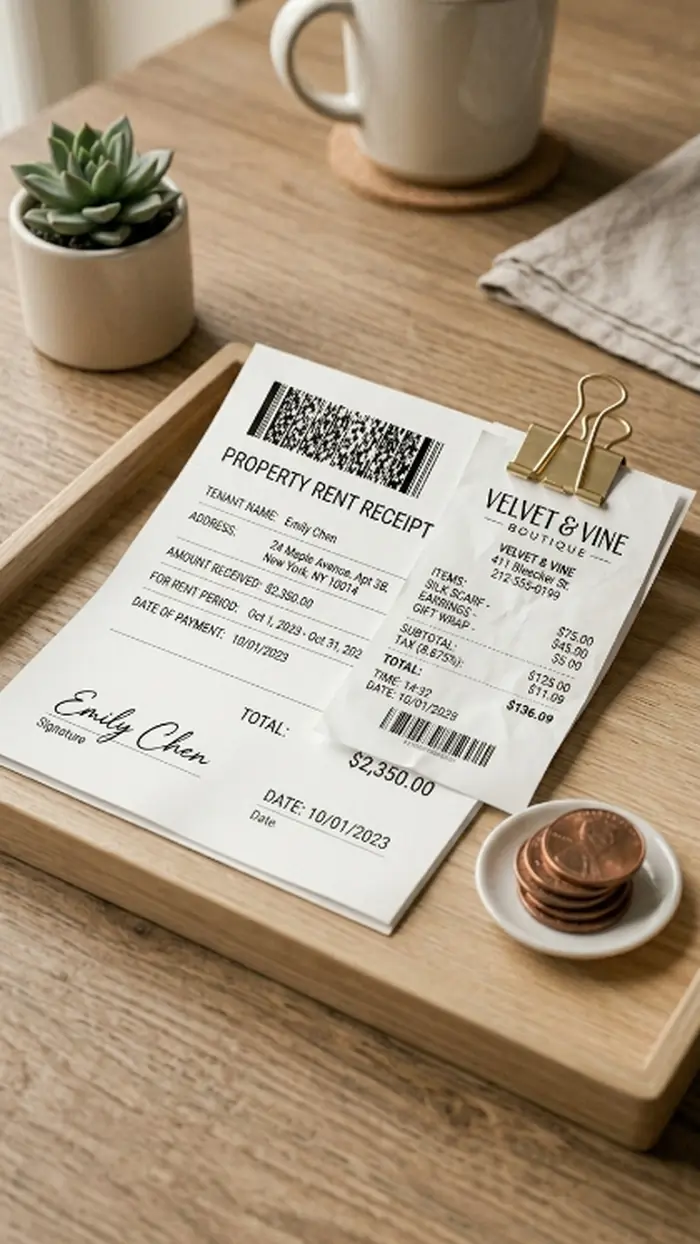
And if your pay changes month to month, percentages of a moving number get awkward. Read how to budget on an irregular income for a version that handles that. If you have tried budgets before and they slipped, here is why that keeps happening.
If you would rather see the three numbers against a real month before committing to the split, the free One-Month Money Reset Kit totals your income, bills and spending for exactly one month.
Adjusted splits when 50% will not cover your needs
High rent is the usual reason the standard split fails. Moving the percentages is a normal adjustment, not a failure of the method. On $2,500 take-home:
| Split | Needs | Wants | Future | When it fits |
|---|---|---|---|---|
| 50 / 30 / 20 | $1,250 | $750 | $500 | Needs genuinely fit in half your pay |
| 60 / 25 / 15 | $1,500 | $625 | $375 | High rent, still saving something |
| 70 / 20 / 10 | $1,750 | $500 | $250 | Expensive city, or a temporary tight stretch |
The 20% is the last thing to cut, not the first. A 70/20/10 month that still moves $250 is worth far more than a perfect 50/30/20 you abandon in week three.
Is the 50/30/20 rule realistic in 2026?
For a lot of households, not exactly as written — and that does not make it useless. If rent alone is 40% of take-home pay, a 50% needs bucket is already nearly gone before food, transport and bills. In that case use the rule as a direction, not a pass/fail test: try 60/25/15 or 70/20/10 for a season, and move one percentage point at a time.
The rule is one of several budgeting methods for beginners. If tracking three buckets still feels loose, zero-based budgeting gives every pound or dollar a named job. If percentages feel abstract, start with the step-by-step setup in how to budget money for beginners and use 50/30/20 as your monthly check-in.
Frequently asked questions
What is the 50/30/20 rule?
It is a simple budget that splits your take-home pay three ways: 50% to needs, 30% to wants, and 20% to savings and debt payoff. It gives you a clear plan without tracking every purchase, which makes it one of the easiest budgets to actually keep.
Does the 50/30/20 rule include savings?
Yes. The final 20% is for your future, meaning savings, an emergency fund, and any extra debt payments beyond the minimums. Paying that 20% first, on payday, is what makes the rule work, because saving what is left over rarely leaves anything.
What is the 50/30/20 rule for a $4,000 monthly income?
On $4,000 take-home, it is $2,000 to needs, $1,200 to wants, and $800 to savings and debt. Move the $800 the day you get paid, then spend the rest across needs and wants with a quick weekly check-in.
Is the 50/30/20 rule realistic with high rent?
Often not, and that is fine. In expensive cities, needs alone can take 65% or more, so the standard split is impossible. Adjust it honestly, maybe 70/20/10 for now, and shift the balance as your income grows or costs drop.
Is 50/30/20 better than zero-based budgeting?
They suit different people. 50/30/20 is simpler and needs less upkeep, which helps it stick. Zero-based budgeting is more precise but takes more effort. Start with 50/30/20 if you want easy, and move to zero-based later if you want tighter control.
Start this week
Work out your three numbers. Move the 20% the next time you get paid. Notice how much calmer “spend the rest, guilt-free” feels than tracking every purchase. The rule is the start. A plan shaped to your real life is what lasts.
This same split is one of the sourced answers in Draftpace’s Ask DP library, alongside grounded questions on legal and financial rules across the US, UK and Canada.
Free kit
Want to try the 50/30/20 split without building the spreadsheet yourself? The free One-Month Money Reset Kit gives you a ready-made month to test it in.
Found this useful?
Pin it to come back to laterKeep reading
A few useful next steps
Best Budgeting Methods for Beginners: 5 Systems Compared
The best budgeting methods for beginners compared: 50/30/20, zero-based, pay yourself first, envelopes and the 80/20 rule. Who each suits, and what to skip.
How to Budget When Your Income Is Different Every Month
A calm budgeting method for freelance, commission, shift, or variable pay. Budget on last month's income, build a buffer month, and stop dreading slow ones.
How to Budget Money for Beginners: A Simple Step-by-Step Guide
Budgeting for beginners made simple: how to budget money in five steps, a first-month example, and budgeting tips that survive past month two.