

Sinking Funds: The Calm Way to Stop Money Surprises
A sinking fund is money you save a little at a time for a cost you already know is coming. The best categories, and how to set up your first three.
Most budgets do not break because of the everyday stuff. They break because of the once-a-year stuff that always feels like a surprise, even though it never is.
The car registration. Christmas. The annual insurance bill. The vet. None of these are actually surprises. You know they are coming. But when they land all at once, they wreck the month anyway. A sinking fund is the quiet fix.
What a sinking fund actually is
A sinking fund is just money you set aside a little at a time for a cost you already know is coming. Instead of getting hit with the whole bill in one painful month, you save a small amount toward it every month, so the money is already there when the bill arrives.
That is the entire idea. It is not clever or complicated. It just means the predictable bills stop ambushing you.
The math is genuinely this simple
Take the yearly cost and divide it by twelve. Save that much each month. Done.
If your car registration is $360 a year, that is $30 a month. When the bill comes, you are not scrambling, you are just moving money you already saved. A $600 Christmas becomes $50 a month starting in January, instead of a January credit card hangover.
The trick is simple: divide the yearly cost by twelve, and save that amount every month. The bill stops being an event and becomes a transfer.
| Cost | Once a year | Set aside monthly |
|---|---|---|
| Car insurance | $840 | $70 |
| Christmas | $600 | $50 |
| Car service and tyres | $480 | $40 |
| Annual subscriptions | $180 | $15 |
| Vet or pet care | $300 | $25 |
| Total | $2,400 | $200 |
$2,400 arriving as five separate surprises is what puts people on a credit card. The same $2,400 as $200 a month is just a bill. Nothing about the cost changed, only when you decided to notice it.
The best categories to start with
You do not need a fund for everything. Start with the costs that have hurt before. Common ones worth a sinking fund:
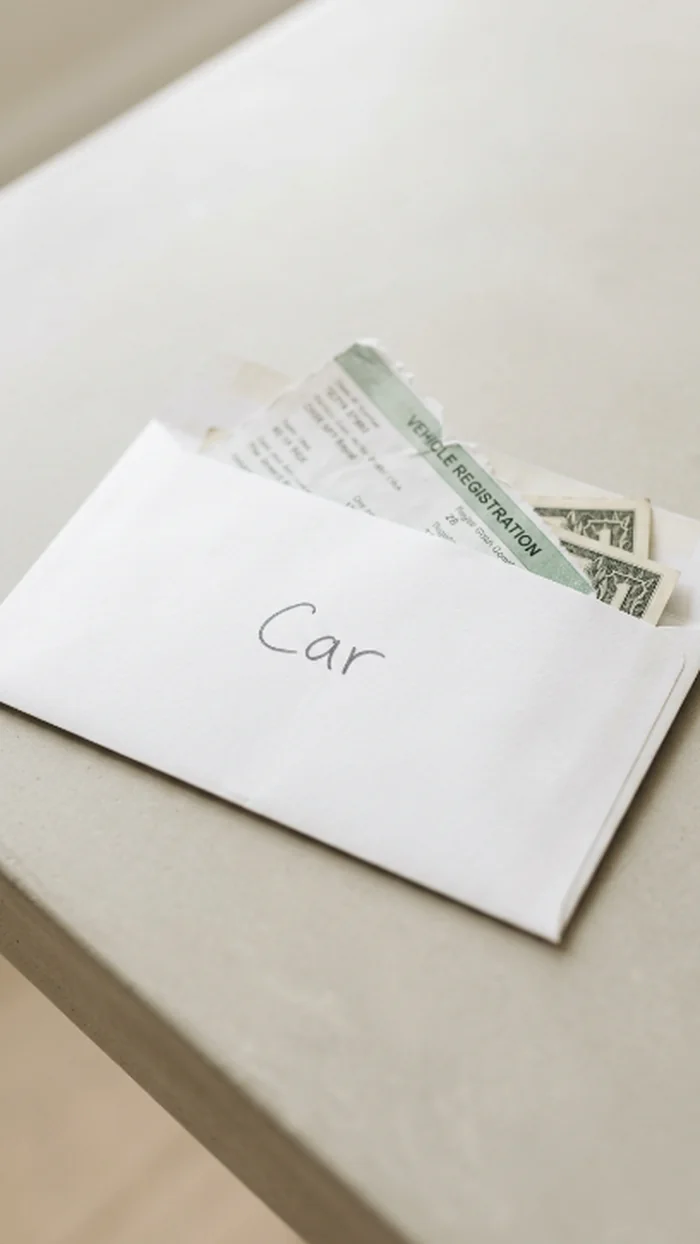
- Car. Registration, servicing, tyres, repairs.
- Christmas and gifts. The big one. Birthdays add up too.
- Annual bills. Insurance, subscriptions you pay yearly, memberships.
- Home. Repairs, appliances that will eventually die.
- Health. Dental, glasses, the pet’s vet visits.
- Travel. The trip you know you want to take.
Pick the ones that match your life. A renter with no car needs different funds than a homeowner with two kids.
How to set up your first three
Do not try to fund everything at once. That is the fastest way to feel overwhelmed and quit.
Start with three. Choose the three costs most likely to blindside you in the next year. Work out the monthly amount for each by dividing by twelve, or by the number of months until you need it. Then give the money a home, ideally a separate savings account, so it does not get spent on a normal Tuesday.
Once those three feel easy, add a fourth. Slow and steady beats ambitious and abandoned.
The honest part
Sinking funds need somewhere to live and a little discipline. Money labelled “Christmas” that sits in your everyday account will quietly become groceries by March. Keep it separate, even if separate just means a clearly named savings account.
And in a very tight month, you may not be able to fund them all. That is fine. Fund the most urgent one, pause the rest, and pick back up when you can. A paused fund is not a failed fund. It is the same forgiveness that keeps a good budget alive.
To work out what your funds can realistically be fed each month, the free One-Month Money Reset Kit totals one month of bills and spending in one place.
Where sinking funds fit
Sinking funds are the calm layer under everything else. They sit alongside your emergency fund, which is for the unknown surprises, while sinking funds handle the known ones. If you are setting up a budget from scratch, they slot neatly into the savings portion of the 50/30/20 rule, and they pair well with a steady savings challenge.
What are the best sinking fund categories to start with?
Car maintenance, annual subscriptions, holiday spending, and home repairs. Pick the three that have ambushed you in the last year — the ones that turned into credit card debt are the ones a sinking fund prevents next time. The full list and the setup math are in the sections above.
Frequently asked questions
What is a sinking fund?
It is money you set aside a little at a time for a specific cost you know is coming, like car registration, Christmas, or insurance. Instead of one painful bill, you save toward it monthly so the money is ready when the bill arrives.
What are the best sinking fund categories?
The costs that have hurt before. Common ones are car maintenance, Christmas and gifts, annual insurance, home repairs, dental and health, and travel. Choose the ones that match your life, since a renter and a homeowner need different funds.
What is the difference between a sinking fund and an emergency fund?
A sinking fund is for known, planned costs you can see coming. An emergency fund is for unknown surprises you cannot predict. You want both: sinking funds handle the expected bills, the emergency fund catches the genuine shocks.
How many sinking funds should I have?
Start with three, the costs most likely to blindside you in the next year. Trying to fund everything at once is the fastest way to feel overwhelmed and quit. Add more only once the first three feel easy.
Where should I keep my sinking funds?
In a separate savings account, away from everyday spending, so the money is not accidentally spent on a normal day. Many banks let you create named savings pots, which keeps each fund clearly labeled and visible.
Start this week
List the three costs most likely to surprise you this year. Divide each by twelve. Open or name a separate account, and move the first month’s amount today.
Free kit
Want to see your bills and sinking funds in one place? The free One-Month Money Reset Kit has a bills-and-subscriptions page built in, no spreadsheet setup required.
Found this useful?
Pin it to come back to laterKeep reading
A few useful next steps
The 50/30/20 Budget Rule, Explained Simply
The 50/30/20 budget rule explained with examples at three incomes: 50% needs, 30% wants, 20% savings. Calculate yours and adjust it when rent is high.
Best Budgeting Methods for Beginners: 5 Systems Compared
The best budgeting methods for beginners compared: 50/30/20, zero-based, pay yourself first, envelopes and the 80/20 rule. Who each suits, and what to skip.
How to Budget When Your Income Is Different Every Month
A calm budgeting method for freelance, commission, shift, or variable pay. Budget on last month's income, build a buffer month, and stop dreading slow ones.