

How to Build Your First $1,000 Emergency Fund (Even on an Unsteady Income)
A calm, step by step plan to save your first $1,000, built for months when your pay is not the same twice. Where to keep it, and the mistakes to skip.
Most money stress is not about the big stuff. It is the small surprise. The car that starts making a noise. The bill you forgot was annual. The thing that turns an ordinary month into a bad one.
A small emergency fund is the difference between a crisis and an annoyance. It is the quiet money that lets you say “fine, I will pay it” instead of lying awake doing maths.
You do not need to be good with money to build one. You need a plan that expects the messy months, because life has those, and so does your bank balance. Here is the whole thing, including how long it takes, where to keep it, and the mistakes that quietly sink it.
Why $1,000, and why first
A thousand dollars is not the finish line. It is the number that covers most of the real surprises, the repair, the excess, the vet, the flight home. Big enough to matter, small enough to actually reach.
Build this before anything fancy. Before investing, before aggressive debt payoff, before any of it. A buffer is what stops the next surprise from undoing your progress and sending you back to the start. Once you have it, you stop reaching for a credit card every time life hiccups, which is how most people slide into debt in the first place.
Later, you will want a bigger cushion, three to six months of expenses is the usual target. But that is a marathon. The first $1,000 is the sprint that makes everything after it calmer.
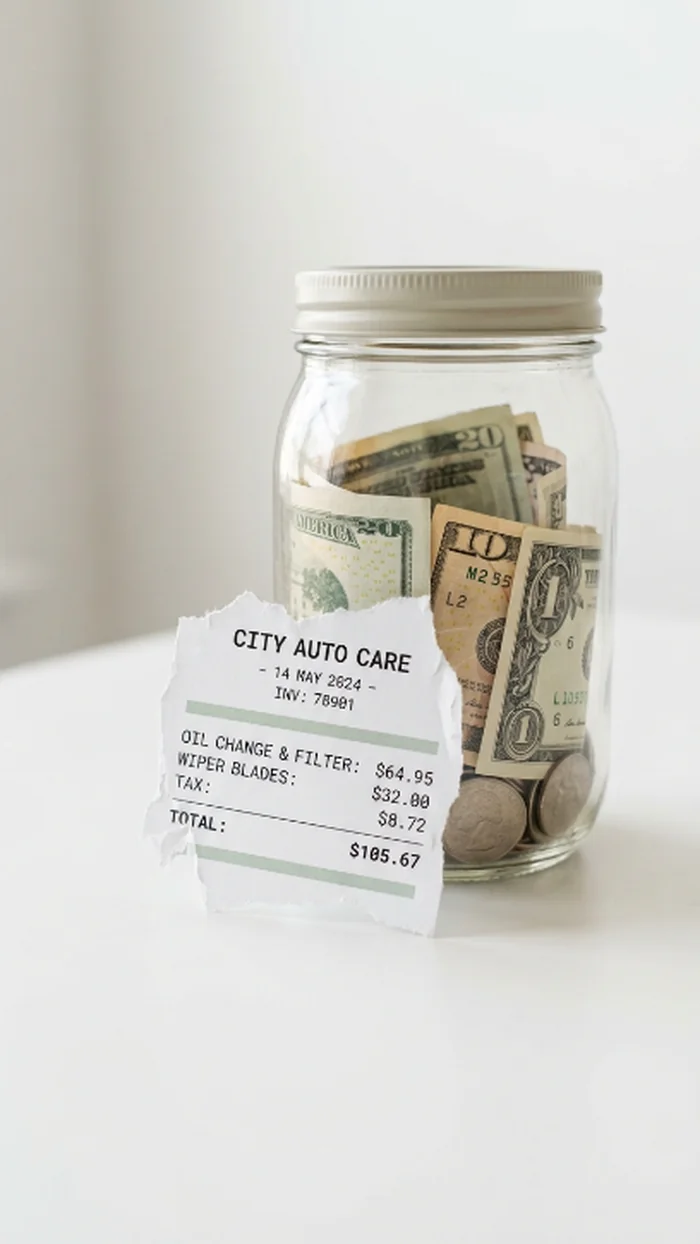
Step 1: Decide where the money lives, before you save a cent
This sounds backwards. It is not. Most savings plans fail because the money has nowhere safe to sit, so it quietly gets spent. Pick the home first.
| Where you keep it | Good for | The honest trade off |
|---|---|---|
| Separate savings account | Out of sight, hard to dip into | Earns little or nothing |
| High yield savings account | Earns interest, still instant to access | Usually online only, no branch |
| Cash in an envelope | Visible, no app, no temptation to invest it | Earns nothing, loses value to inflation, can be lost |
For an emergency fund, a high yield savings account is usually the best choice. The money stays available within a day or two, and it earns a little while it waits. The one rule that matters more than the account type: keep it separate from your everyday spending, so it is not sitting there tempting you on a normal Tuesday.
Step 2: Choose a rhythm that matches your pay, not the calendar
This is where unsteady income usually breaks a plan. Most savings challenges assume the same amount every week. Your pay does not work that way, so the plan should not either.
Save a slice of each payment when it lands, on payday, before the money disappears into the week. If your income swings, set two numbers. A small amount you save even in a lean month, and a bigger amount you add when a good payment comes in. The lean number keeps the habit alive. The good month does the heavy lifting. The same logic runs your whole budget in how to budget on an irregular income.
How long will $1,000 actually take?
It depends entirely on what you can spare, and seeing it laid out makes it feel possible. Pick the row that fits your real life, not your most optimistic one.
| If you save | You reach $1,000 in |
|---|---|
| $25 a week | About 10 months |
| $50 a week | About 5 months |
| $100 a week | About 10 weeks |
| $250 a month | 4 months |
| $84 a month | About 12 months |
None of these require a big income. They require a small, boring, repeated transfer. The person who saves $25 a week without fail beats the person who plans to save $200 and never starts.
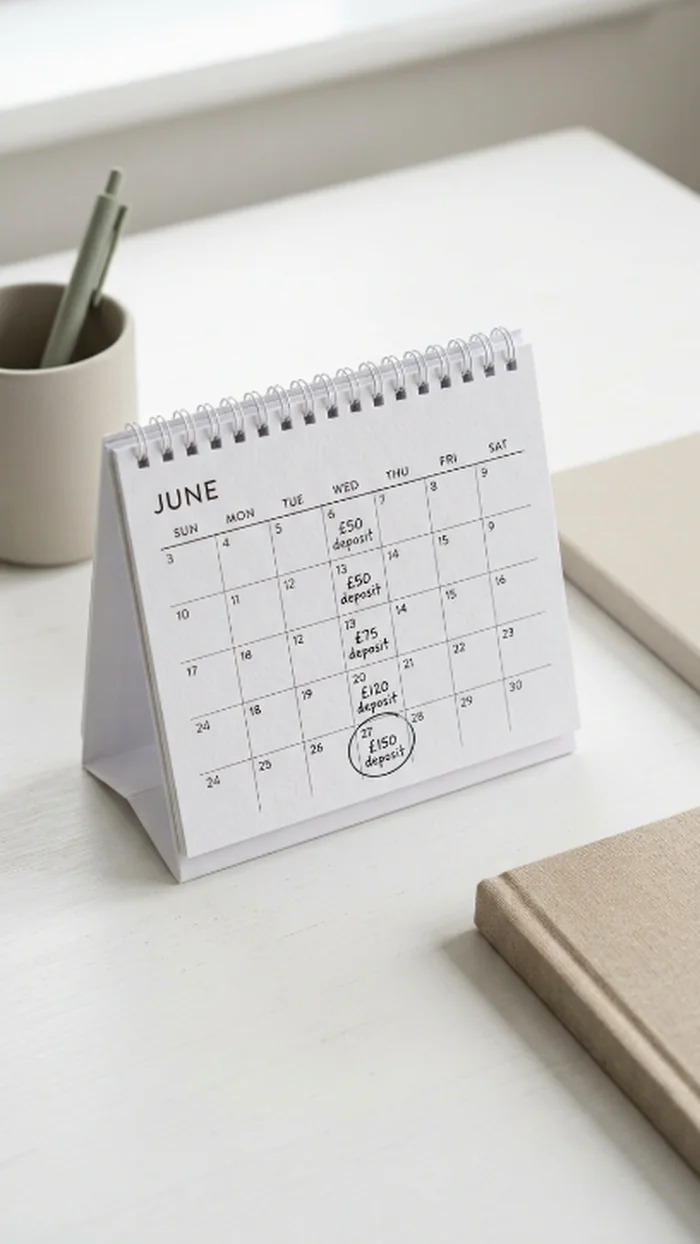
Money is only saved once it has actually moved. Not when you plan to save it. Not when you color in the box. Once the money is in its home.
Step 3: Plan the bad week before it happens
You will have a week that goes sideways. You will save nothing, or you will have to dip in. This is not failure. It is the normal shape of a year.
So decide now that a missed week is a pause, not an ending. When the money is back, you pick up exactly where you left off. No starting over. A plan that expects the bad week is a plan that survives it, which is the same reason most budgets fail and this one does not.
Common mistakes that sink a starter fund
A few quiet traps catch almost everyone:
- Keeping it in your checking account. It always gets spent. Separate it.
- Investing your emergency fund. This money needs to be safe and instant, not growing. The stock market can be down exactly when your car breaks down.
- Setting the target too high to start. “Save six months of expenses” is paralyzing. $1,000 first, then build from there.
- Not refilling it after you use it. Using the fund is the point. The next step is quietly rebuilding it, because the next surprise is always coming.
- Saving what is left over. There is rarely anything left over. Pay the fund first, on payday, like a bill you owe your future self.
The honest part
A thousand dollars will not fix a budget that does not balance. If more goes out than comes in every month, the fund buys you time, not a solution, and the real lever is spending or income.
And if you are choosing between this and the minimum payment on a high interest debt, make the minimums first, then build the buffer. A small buffer still helps, because it stops the next surprise going straight back onto the card.
If the sticking point is finding the money at all, the free One-Month Money Reset Kit includes a money leak check for spotting what is quietly leaving each month.
Frequently asked questions
How much should an emergency fund be?
Start with $1,000, which covers most common surprises. Once that is in place, build toward three to six months of essential expenses for full security. The first $1,000 is the urgent part. The larger cushion can grow slowly after that.
Where should I keep my emergency fund?
In a separate account from your everyday spending, ideally a high yield savings account. It stays instant to access while earning a little interest. Avoid investing it, because this money needs to be safe and available the moment you need it.
How fast can I save $1,000?
At $100 a week it takes about 10 weeks. At $50 a week, about 5 months. At $25 a week, around 10 months. Pick the amount you can repeat without fail, because consistency matters more than speed.
Is a $1,000 emergency fund enough?
It is enough to handle most everyday surprises and stop you reaching for a credit card. It is not your final safety net. Treat it as the first milestone, then build toward several months of expenses over time.
Should I save an emergency fund or pay off debt first?
Build a small starter fund first, even $500 to $1,000, so a surprise does not push you deeper into debt. Keep making minimum payments on your debt while you do. Once the starter fund exists, shift your focus to paying the debt down hard.
Start this week
Open the account or set out the envelope. Move whatever you can, even five dollars. Mark it once it has landed. That is the whole method. Repeat until you reach a thousand, then keep going.
If a fixed structure helps, pick one from 7 savings challenges that actually work.
Free kit
Tracking your first $1,000 is easier with a place to put the numbers. The free One-Month Money Reset Kit includes a spreadsheet tracker built for exactly this.
Found this useful?
Pin it to come back to laterKeep reading
A few useful next steps
The 100 Envelope Challenge: How to Actually Save $5,050
The 100 envelope challenge saves $5,050 in 100 days. How it works, how much you save weekly, a lower-income version, and how to actually finish it.
The 52 Week Savings Challenge, Reworked for Real Pay
Save about $1,378 in a year, one deposit a week. How the 52 week challenge works, a friendlier version for real budgets, and how to finish it.
Cash Stuffing Without the Cash: Digital Envelopes That Actually Work
Cash stuffing for beginners without carrying cash: how digital envelopes work, the best categories to stuff, and when physical cash still helps.