

Cash Stuffing Without the Cash: Digital Envelopes That Actually Work
Cash stuffing for beginners without carrying cash: how digital envelopes work, the best categories to stuff, and when physical cash still helps.
Cash stuffing is having a moment. Open any money corner of the internet and you will find people dividing their pay into neat labeled envelopes, the satisfying ritual of it racking up billions of views. And the core idea genuinely works.
But here is the quiet truth: the magic is not the cash. It is the envelopes. And you can get the whole benefit without carrying a single note around, which is safer and works for far more people.
Cash stuffing for beginners: start with three envelopes
If you are new to cash stuffing, do not start with twelve categories. Start with the three where card spending leaks most often for you — usually groceries, eating out, and one personal category like coffee, clothes or online shopping.
Give each one a digital envelope (a separate savings pot, sub-account or tracker category), move the month’s amount in on payday, and check the balance before you spend, not after. That is the whole system. Once three envelopes survive a full month, add sinking funds for the predictable costs that used to ambush you, like car maintenance and annual subscriptions.
A beginner budget underneath it helps. If you do not have one yet, set the amounts with the 50/30/20 budget rule first, then stuff the “wants” categories as envelopes. The envelope is the daily guardrail; the budget is the map.
What cash stuffing actually does
The cash envelope system is simple. You take the money for your spending categories, groceries, fuel, eating out, fun, and you physically put it into separate envelopes. When an envelope is empty, you are done spending in that category for the month.
Why it works is behavioral, not financial. Handing over real cash hurts a little more than tapping a card, so you spend more carefully. And a visible, shrinking envelope gives you instant feedback that a number on a screen never does. You can see the month running low.
That feedback is the entire benefit. The cash is just one way to create it.
The problem with literal cash
For all its charm, physical cash has real downsides. It earns nothing and slowly loses value to inflation. It can be lost or stolen, with no way to get it back. Running to an ATM to refill envelopes is a chore. And paying rent or online bills with cash is awkward or impossible.
For your spending money, cash can genuinely help if tapping a card is your weak spot. For your savings, cash sitting idle in an envelope is usually the wrong call. It belongs somewhere safe and earning, as we cover in where to keep your emergency fund.
Digital envelopes: the same trick, no cash
You can recreate the entire envelope system digitally, and keep the feedback that makes it work.
A few ways to do it:
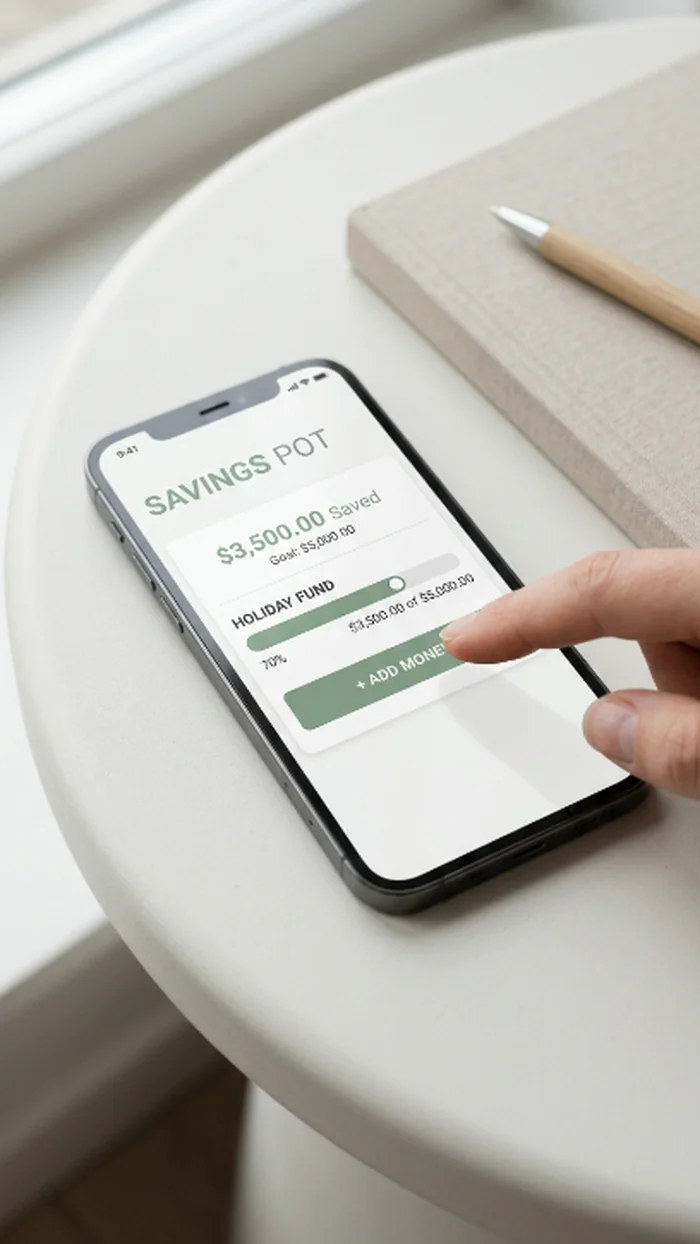
- Multiple savings pots or sub-accounts. Many banks now let you create named pots inside one account, one per category. That is a digital envelope, instantly.
- A simple tracker or sheet. List each category, its limit, and what is left. Update it as you spend. The shrinking number gives you the same signal as a thinning envelope.
- One account per goal. For bigger savings categories and sinking funds, a separate account per goal keeps each one visible and untouchable.
The key is that each category has a clear limit and a running balance you actually look at. Do that, and you have cash stuffing without the cash.
Whether the envelope is paper or digital, only count what has actually moved. A category is only funded once the money is really sitting in it.
Setting the three limits, with numbers
Digital envelopes only work once each category has a figure. This is a realistic starting set for someone taking home $2,800 a month, built from the three categories that overspend most.
| Envelope | Monthly limit | Weekly pace |
|---|---|---|
| Groceries | $360 | $83 |
| Eating out | $160 | $37 |
| Personal spending | $120 | $28 |
The weekly column is the part that makes it usable. Nobody can feel whether $360 of groceries is on track on the 12th, but most people can tell whether they are near $83 by Sunday. Set the monthly limit, then check against the weekly pace.
Pick limits from what you actually spent last month, not from what you wish you spent. A limit you miss in week two teaches you nothing except that the system does not work.
When physical cash still wins
Cash is not wrong, it is just specific. Keep it physical if you genuinely overspend on cards and need the friction, if a category tempts you constantly and seeing it shrink helps, or if the ritual itself keeps you engaged. For everyone else, digital is safer and easier. There is no prize for carrying cash if a tracker does the same job.
This whole approach is really just envelope-style budgeting. If you want the bigger picture first, start with the 50/30/20 rule or why most budgets fail.

Whichever version you run, the envelopes only work once you know what each category can hold. The free One-Month Money Reset Kit totals one month of bills and spending to give you those starting limits.
Frequently asked questions
What is cash stuffing?
Cash stuffing, also called the cash envelope system, means dividing your spending money into labeled envelopes by category. When an envelope is empty, you stop spending in that category. It works because handing over cash feels more real than tapping a card.
Can you do cash stuffing digitally?
Yes, and for most people it is the better option. Use named savings pots, sub-accounts, or a simple tracker so each category has a limit and a running balance. You keep the visible feedback that makes cash stuffing work, without the risk of carrying cash.
Is cash stuffing a good idea?
It is a good idea if tapping a card leads you to overspend, because the friction of cash makes you more careful. If you do not have that problem, a digital version gives the same benefit while keeping your money safer and earning interest.
What are the downsides of cash stuffing?
Physical cash earns nothing and loses value to inflation, can be lost or stolen with no recovery, needs trips to the ATM to refill, and cannot easily pay online bills or rent. Digital envelopes avoid all of these.
How many cash envelopes should I have?
Start with a few key spending categories, often groceries, fuel, eating out, and fun. Too many envelopes becomes a chore to maintain. Keep it to the handful of categories where you actually tend to overspend.
Is cash stuffing good for beginners?
Yes, if you keep it small. Three envelopes, one month, amounts taken from a simple budget. Beginners usually quit when they stuff too many categories and have to keep refilling them. Digital envelopes lower that friction because you can move money back in seconds when real life does not match the plan — the habit matters more than the paper.
What are the best categories for cash stuffing?
Start where overspending is invisible on a card: groceries, eating out, fun money, and one personal leak category. Rent, utilities, insurance and debt payments are better left as automatic bank payments. Add sinking funds later for irregular costs, and keep emergency savings separate in a savings account rather than in an envelope.
Start this week
Pick three spending categories you tend to blow, give each a clear monthly limit, and choose your envelopes, paper or digital. Then watch each one as the month runs, and stop when it is empty.
Free kit
Prefer a digital version of the envelope method? The free One-Month Money Reset Kit's spreadsheet tracker does the same job without the cash.
Found this useful?
Pin it to come back to laterKeep reading
A few useful next steps
The 100 Envelope Challenge: How to Actually Save $5,050
The 100 envelope challenge saves $5,050 in 100 days. How it works, how much you save weekly, a lower-income version, and how to actually finish it.
The 52 Week Savings Challenge, Reworked for Real Pay
Save about $1,378 in a year, one deposit a week. How the 52 week challenge works, a friendlier version for real budgets, and how to finish it.
High-Yield Savings Accounts, Explained: Is Switching Banks Worth It?
The average savings account pays a fraction of a percent. High-yield accounts pay ten times that, what the difference looks like, and how to switch.