

How to Find Your First Freelance Client Without Begging People You Know
A calm, non-cringe way to land your first freelance client. Warm outreach done right, targeted pitching that works, and the mistakes to avoid.
The first client is the hardest, and not for the reason you think. The skill is usually there. What stops people is the fear of sounding desperate, of spamming friends, of that cringe when you ask someone to hire you. So they wait to be discovered instead, and discovery rarely comes.
There is a calmer way. You can land your first client through outreach that feels professional, not needy, using two channels that actually work: warm contacts done with dignity, and targeted pitches that solve a stated problem. Neither one involves begging.
The one honest rule: people hire freelancers who make a problem easier to solve, not freelancers who need the work. Lead with their problem, and the desperation disappears.
Why “waiting to be found” fails
Freelance platforms and social feeds are crowded. Sitting on a finished profile hoping a client stumbles onto you is like opening a shop on an empty street and waiting. The freelancers who start fast are the ones who reach out first, because they meet the client where the need already is.
Outreach is not the pushy option. It is the respectful one, because it puts a solution in front of someone who has the problem.
Channel one: warm outreach, done with dignity
Your existing network is the fastest path, but the trick is to inform, not beg. There is a big difference between “please, does anyone have work for me” and “I have started offering X for businesses like yours, here is what I do, know anyone who could use it?”
The first is desperate. The second is a professional letting people know a service exists. Post it once, clearly, and message a handful of specific people who might genuinely know someone. You are not asking for charity. You are announcing capability.
Channel two: targeted pitching that works
Cold outreach fails when it is generic and succeeds when it is specific. Do not send fifty copy-paste messages. Send ten tailored ones, each of which:
- Names a real problem you noticed for that specific business
- Shows briefly that you can fix it, with a relevant sample
- Makes one small, clear ask, a short call or a quick trial piece
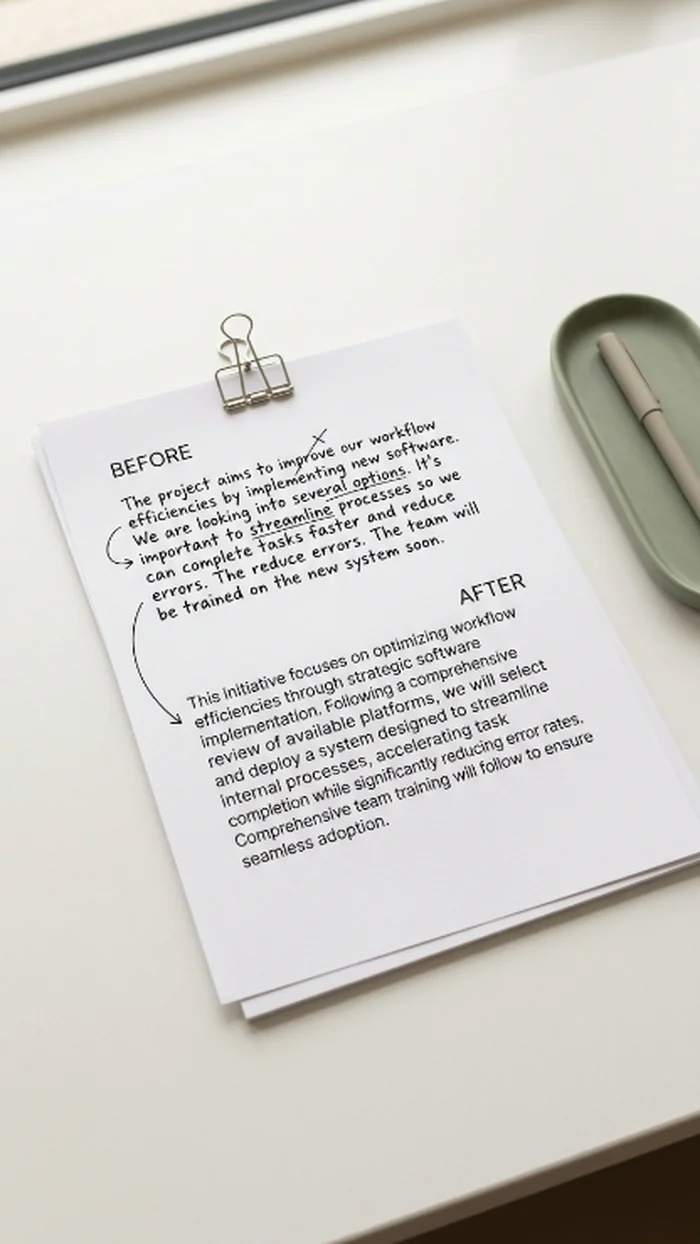
A pitch that says “I noticed your product pages have no descriptions, here are two I wrote for you as an example” is nearly impossible to ignore, because it has already started the work. This is where your portfolio samples earn their keep.
Channel three: platforms, used deliberately
Freelance marketplaces work if you treat proposals like the targeted pitches above, not like lottery tickets. Read the brief, address the specific need, and reference relevant proof. A few well-aimed proposals beat fifty generic ones. Upwork’s own beginner resources explain how these platforms weigh proposals if you want to understand the mechanics.
The first-client discount question
Should you take a lower rate for the first client? A small, clearly framed starter rate can be worth it, if it buys you a testimonial and a referral. What you must avoid is working for free indefinitely or letting a low first rate become your permanent rate. Frame it as a one-time launch rate, deliver brilliantly, and price properly from client two. The full approach is in how to price your first freelance service.
The messages, written out
Advice to “reach out warmly” is easy to agree with and hard to act on at the moment of typing. These are the three that cover almost every first-client situation.
Warm outreach, to someone who knows you
Hi Sam, I have started taking on freelance copywriting alongside my job. I am not asking you for work, but if anyone in your network ever needs product pages or emails written, I would appreciate you passing my name on. Either way, hope the new place is treating you well.
Names the service, removes the obligation, and ends on them. The "not asking you for work" line is what stops a warm contact going quiet on you.
Cold pitch, to a business you have researched
Hi, I came across your shop while looking at handmade ceramics. Your product photos are lovely but the descriptions are one line each, which is likely costing you in search. I write product copy for small makers. Would it be useful if I rewrote three listings so you can see the difference? No charge and no obligation either way.
One specific observation proves you actually looked. The free sample is capped at three so it is a demonstration rather than unpaid work.
The follow-up, one week later
Hi again, just floating this back up in case it got buried. Happy to leave it there if the timing is wrong, no hard feelings at all.
One follow-up, with an explicit exit. Most first clients come from the second message, and almost none come from the fourth.
What makes outreach feel desperate (and how to fix it)
- Leading with your need. Fix: lead with their problem.
- Vague asks. “Any work?” gives nothing to say yes to. Fix: one specific, small ask.
- Mass, identical messages. Fix: fewer, tailored ones with a real detail about them.
- Over-apologising. You are offering value, not imposing. Fix: state the offer plainly and stop.
Frequently asked questions
How do I get my first freelance client?
Combine two channels: tell your existing network clearly that you now offer a specific service, and send a small number of tailored pitches to businesses with a problem you can solve. Lead with their need, not yours, and include relevant proof.
How do I find clients without a portfolio?
Build three to five sample pieces first, then use them in targeted pitches. A sample that solves the prospect’s exact problem doubles as your proof, so you do not need past clients to start winning work.
Should I work for free to get my first client?
Not indefinitely. A small, clearly framed one-time starter rate can be worth it if it earns a testimonial and referral. Avoid ongoing free work, and price properly from your second client onward.
How many pitches should I send?
Quality over volume. Ten specific, tailored pitches usually outperform fifty generic ones. Each should name a real problem, show you can fix it, and make one small, clear ask.
One calm next step
Choose five businesses or contacts today. For each, write one specific line about a problem you could solve for them. Send those five before you overthink it. Five real, tailored messages will move you further than a week of polishing your profile.
Once the first client says yes, deliver brilliantly and ask for a testimonial while the result is fresh. Then set your real rate with how to price your first freelance service. And when that first invoice clears, the free One-Month Money Reset Kit gives the money somewhere to land instead of quietly disappearing into a normal month.
Free kit
Get the Free Money Reset Kit.
Found this useful?
Pin it to come back to laterKeep reading
A few useful next steps

Best Freelance Jobs for Beginners You Can Do From Home (No Experience Needed)
The freelance services beginners can actually land from home, with the skill each needs and how saturated it is. Honest, not hyped.

How to Build a Freelance Portfolio When You Have No Clients
No clients yet, no problem. How to build a freelance portfolio from self-made sample projects that win real work, and what to include in each piece.
How to Price Your First Freelance Service (Without Undercharging)
How to set your first freelance rate with confidence. Value-based versus hourly, how to research the going range, and how to raise prices as your proof grows.