

How to Price Your First Freelance Service (Without Undercharging)
How to set your first freelance rate with confidence. Value-based versus hourly, how to research the going range, and how to raise prices as your proof grows.
Pricing is where new freelancers quietly sabotage themselves. Terrified of scaring clients off, they name a number far too low, win the work, and then resent it for months. Or they freeze completely, because nobody ever told them what to charge.
Both come from the same gap: no framework. So here is one. You do not need years of experience to price fairly. You need a way to reason about it, and the confidence to hold the number once you have set it.
The one honest rule: charge for the value of the result, not the hours you are scared to bill for. A client pays to have a problem gone, not to buy your time by the minute.
Why undercharging backfires
A rock-bottom rate feels safe. It is not. It signals low quality to serious clients, it attracts the most demanding buyers who pay the least, and it caps what you earn no matter how hard you work. Worse, it is hard to climb out of, because your existing clients anchor to the low number.
Starting low to “get a foot in the door” is fine as a deliberate, temporary move. Starting low because you are afraid is a trap.
Value-based versus hourly
Two ways to price, and beginners usually reach for the wrong one.
Hourly ties your income to time. Simple, but it punishes you for getting faster and better, which is the opposite of what you want. It also invites clients to question your speed rather than value your outcome.
Value-based prices the result. What is it worth to the client to have this problem solved? A set of product descriptions that lifts sales is worth far more than “four hours of writing.” Where you can, price the outcome, not the clock.
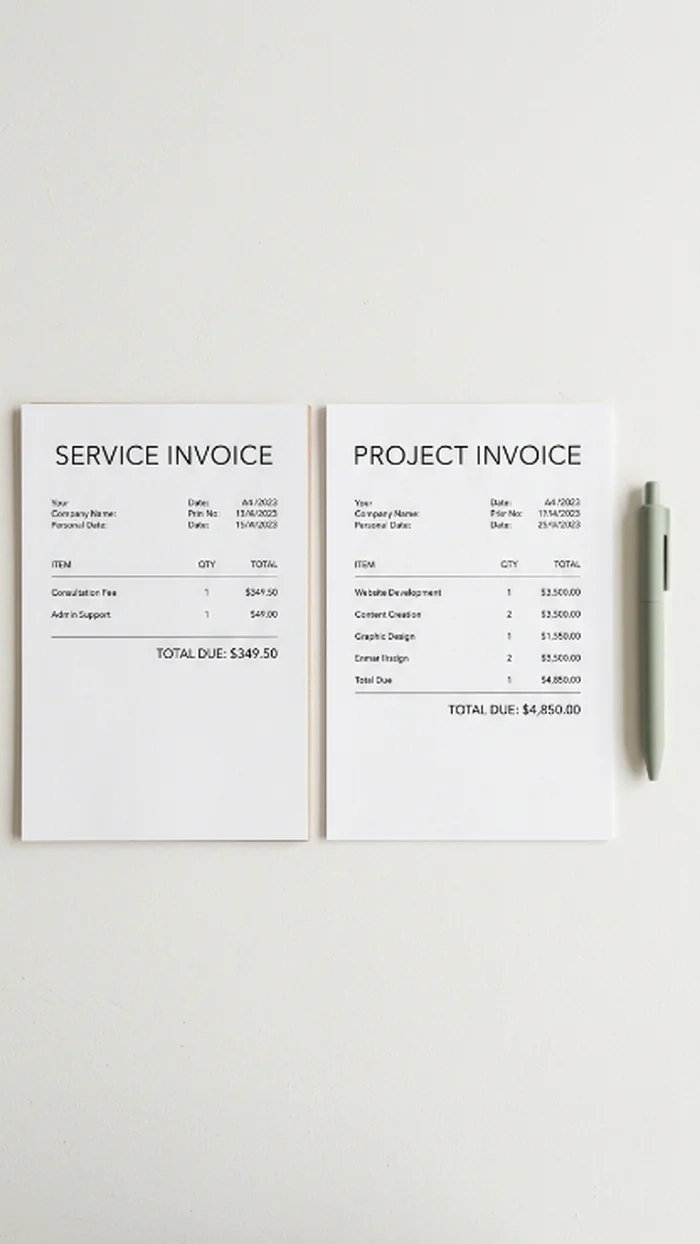
For a genuine beginner, a reasonable middle path is a flat project price, informed by roughly how long it takes you but framed around the deliverable. It gives the client certainty and protects you from being paid less as you improve.
How to find the going range
You are not pricing in the dark. Research it. Look at what others offering the same service charge on freelance platforms, ask in communities for your field, and check published rate guides. This gives you a range, not a single number.
Then position yourself inside that range based on your proof. A total beginner with strong samples sits at the lower-middle, not the bottom. You are new, not worthless, and your portfolio justifies a real rate.
Setting your first number
Combine three inputs: the going range for the work, the value of the result to the client, and where your proof places you in that range. Land on a number that feels slightly uncomfortable, a touch higher than your fear wants. That mild discomfort usually means it is about right.
Then hold it. When a client accepts without hesitation, that is not a sign you got lucky. It often means you could have charged more.

What an hourly rate has to cover
The reason a freelance rate looks high next to a salary is that it is not the same number. A salaried hour is paid; a freelance hour has to fund the unpaid ones around it.
| Hours | |
|---|---|
| Hours in a working week | 40 |
| Less admin, invoicing, bookkeeping | 5 |
| Less pitching and outreach | 5 |
| Less marketing, portfolio, learning | 5 |
| Actually billable | 25 |
Roughly 60% of the week is billable once the business of being a freelancer is accounted for, and that is a good week rather than a bad one.
Forty-six weeks, not fifty-two, because holiday and illness are unpaid. Then add whatever your tax, software and pension cost on top, because a salary quietly included those and an invoice does not. A rate that looks like double a salaried hourly is often the same money.
Raising your rates as you grow
Your first rate is a starting point, not a ceiling. Raise it as your proof stacks up: after a few strong results, a full portfolio, or a waitlist of interest. Raise it for new clients first, so you are never renegotiating from zero. Each testimonial and case study is permission to charge more, because it lowers the client’s risk.
The starter-rate exception
For your very first client, a modest one-time launch rate can be a smart trade if it buys a testimonial and a referral, as covered in finding your first client. The rules: frame it explicitly as a one-time rate, deliver exceptional work, and price properly from client two. Never let a launch rate quietly become your standard.
Frequently asked questions
How much should a beginner freelancer charge?
Research the going range for your service, then position yourself in the lower-middle of it based on your samples, not at the bottom. Being new justifies a modest starting rate, not a rock-bottom one.
Should I charge hourly or per project?
Per project is usually better, because hourly pricing punishes you for getting faster and invites clients to question your time. A flat project price framed around the deliverable gives clients certainty and protects your income as you improve.
How do I know if my rate is too low?
If clients accept instantly with no hesitation, your rate is often too low. A correctly set rate meets a little consideration. Undercharging also tends to attract demanding, low-paying clients.
When should I raise my freelance rates?
Raise them as your proof grows: after strong results, a fuller portfolio, or steady demand. Apply increases to new clients first, and treat each testimonial as permission to charge more because it lowers the client’s risk.
Is it okay to lower my price for the first client?
Yes, as a deliberate one-time launch rate that earns a testimonial and referral. Frame it clearly as temporary, deliver brilliantly, and return to your proper rate for the next client.
One calm next step
Research three others offering your service, note their rates, and set your own number in the lower-middle of that range. Write it down and commit to holding it on your next pitch.
That completes the freelancing path: you have the roadmap, a portfolio, a way to find clients, and now a price. If you are turning an existing job skill into this, turning your skill into a better-paid freelance service connects it to your career. For the month after that, the free One-Month Money Reset Kit is a straightforward way to check whether your new rate is covering what you need it to.
Free kit
Get the Free Money Reset Kit.
Found this useful?
Pin it to come back to laterKeep reading
A few useful next steps

How to Find Your First Freelance Client Without Begging People You Know
A calm, non-cringe way to land your first freelance client. Warm outreach done right, targeted pitching that works, and the mistakes to avoid.

Best Freelance Jobs for Beginners You Can Do From Home (No Experience Needed)
The freelance services beginners can actually land from home, with the skill each needs and how saturated it is. Honest, not hyped.

How to Build a Freelance Portfolio When You Have No Clients
No clients yet, no problem. How to build a freelance portfolio from self-made sample projects that win real work, and what to include in each piece.