

How to Build a Freelance Portfolio When You Have No Clients
No clients yet, no problem. How to build a freelance portfolio from self-made sample projects that win real work, and what to include in each piece.
The freelance catch-22 looks impossible from the inside. You need a portfolio to get clients, but you need clients to build a portfolio. Round and round.
Here is the way out, and it is simpler than it seems. A portfolio does not prove you have been hired. It proves you can do the work. And you can prove that without a single client, by making sample projects that look exactly like the paid work you want. Clients hire the capability, not the receipt.
The one honest rule: a portfolio’s job is to show you can solve the client’s problem. A self-made sample that does that is worth more than a real project that does not.
Why self-made samples actually work
A hiring client is not auditing your past. They are asking one quiet question: can this person deliver what I need? A strong sample answers it directly. It shows your thinking, your quality, and your style, which is exactly what a testimonial only hints at.
Done well, three to five sharp samples can outperform a thin list of small real jobs, because you control the brief and can make each one impressive on purpose.
Step 1: Decide what the portfolio needs to prove
Work backwards from the service you are selling. If you want to write product descriptions for e-commerce shops, your samples should be product descriptions for e-commerce shops. If you want to design social posts for cafes, design social posts for a fictional cafe. The portfolio should mirror the job, not show your range for its own sake.
Step 2: Invent realistic briefs
Give yourself the brief a client would give you. Pick a real type of business, imagine its problem, and solve it. A struggling local bakery that needs a menu redesign. A new app that needs three onboarding emails. Realistic constraints make the work look real, because it is, minus the invoice.
Step 3: Make three to five strong pieces, not ten weak ones
Quality decides this, not quantity. Three excellent, relevant pieces beat ten scattered ones. Each piece should be something you would proudly hand a paying client. If a sample is not strong, it is lowering your average, so cut it.
Step 4: Show the thinking, not just the result
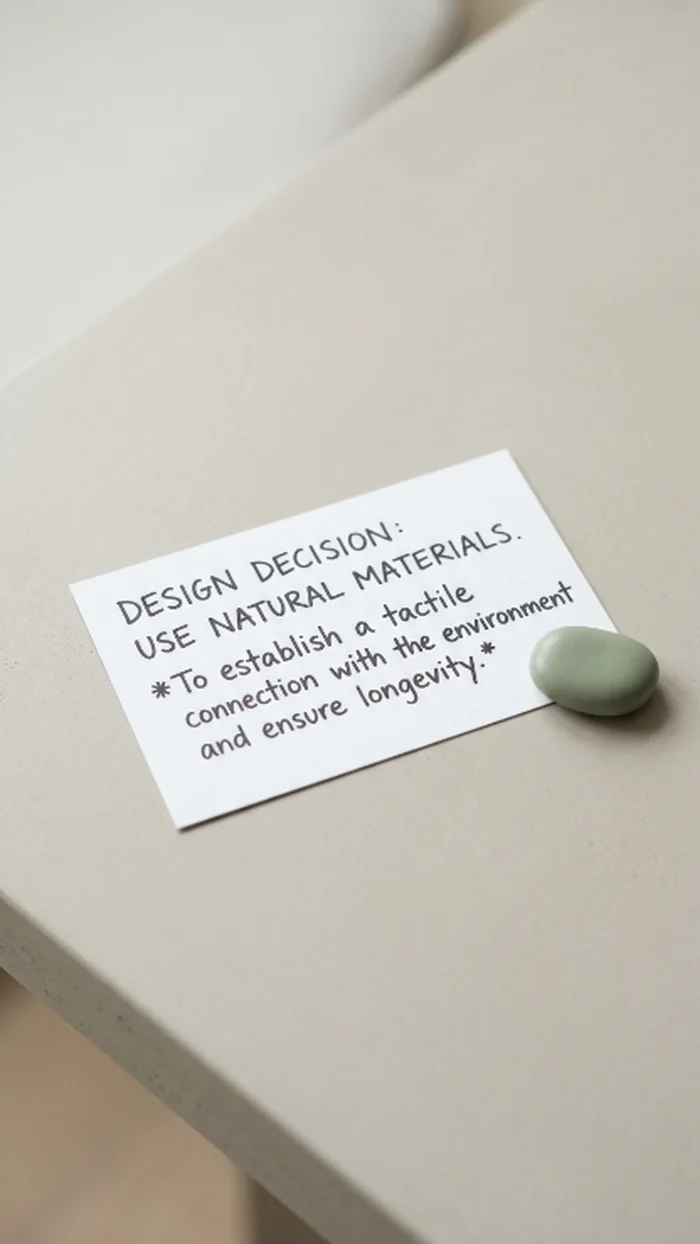
This is what separates a portfolio from a gallery. For each piece, add a short note: what the problem was, what you decided, and why. Clients hire judgement, not just output, and showing your reasoning proves you have it. A sentence or two per piece is enough.
Step 5: Convert early work into more proof
The moment you land your first real client, the portfolio gets easier. Ask permission to feature the work, request a short testimonial while the result is fresh, and swap your weakest sample for the real project. Every job feeds the portfolio, which wins the next job. That is the compounding loop covered in finding your first freelance client.
Where to host it
You do not need a fancy site to start. A clean, simple page or a well-organised profile on the platform you are using works. What matters is that the work is easy to view and clearly presented. Presentation is part of the pitch, so keep it uncluttered and let the pieces lead.
What each sample needs before it goes public
- A one-line brief, so the reader knows what the piece was solving
- The constraint you worked within, since good work is judged against a limit
- The finished thing, shown large enough to actually read
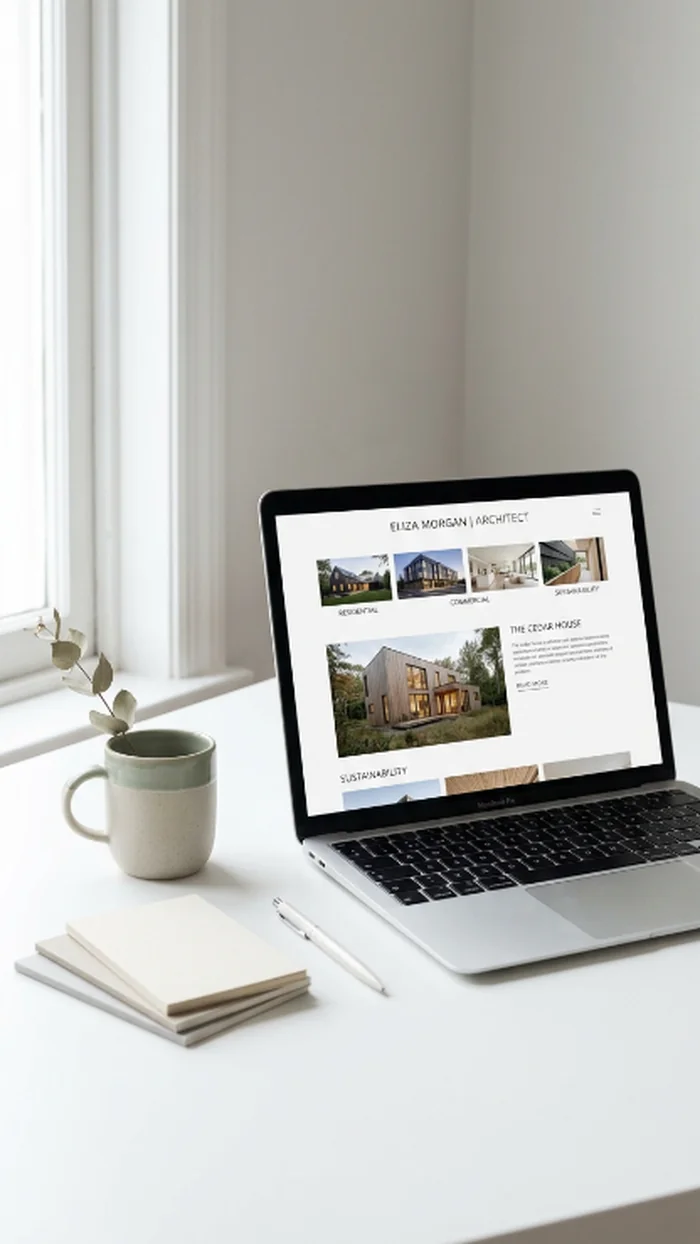
- Two or three sentences on why you made the choices you made
- An honest label if it was self-set, which nobody minds and which protects you
The fourth item is what separates a portfolio from a gallery. A client cannot tell whether a layout is good, but they can tell whether the person explaining it thought about their problem.
What to avoid
- Padding with weak work. Every mediocre piece drags down the strong ones. Fewer, better.
- Showing unrelated range. A client hiring a writer does not need to see your logo designs. Match the portfolio to the service.
- No context. A result with no explanation makes the client guess. A short note on your thinking removes the doubt.
- Waiting until it is perfect. A good portfolio shipped this week beats a perfect one shipped never. Start pitching once you have three strong pieces.
Frequently asked questions
How do I build a portfolio with no experience?
Create three to five sample projects that mirror the paid work you want, using realistic self-assigned briefs. These prove your capability directly, which is what clients actually hire on, so you do not need past clients to start.
How many pieces should a beginner portfolio have?
Three to five strong, relevant pieces is enough to start. Quality and relevance matter far more than quantity, and weak filler pieces lower the overall impression.
Do sample projects count as real portfolio work?
Yes. Clients care whether you can solve their problem, not whether a piece was paid. A well-executed sample that matches their need is compelling proof and is completely legitimate to show.
How do I make my portfolio stand out?
Match every piece tightly to the service you sell, and add a short note on your thinking for each one. Showing your reasoning, not just the result, proves the judgement clients are really paying for.
One calm next step
Pick the single service you want to be hired for, invent one realistic brief for it, and make the first sample this week. One strong piece is enough to begin, and the rest follow quickly.
Next in the sequence: find your first freelance client, then price your service. If you are still choosing what to offer, revisit the best freelance jobs for beginners. And for when the work starts paying, the free One-Month Money Reset Kit turns an irregular freelance month into something you can actually read.
Free kit
Get the Free Money Reset Kit.
Found this useful?
Pin it to come back to laterKeep reading
A few useful next steps
How to Find Your First Freelance Client Without Begging People You Know
A calm, non-cringe way to land your first freelance client. Warm outreach done right, targeted pitching that works, and the mistakes to avoid.
Best Freelance Jobs for Beginners You Can Do From Home (No Experience Needed)
The freelance services beginners can actually land from home, with the skill each needs and how saturated it is. Honest, not hyped.
How to Price Your First Freelance Service (Without Undercharging)
How to set your first freelance rate with confidence. Value-based versus hourly, how to research the going range, and how to raise prices as your proof grows.