

Does Paying Off Debt Raise Your Credit Score? What Actually Moves It
Paying off debt does not move your score the way most people expect. What actually changes it while you pay, and why the number sometimes dips first.
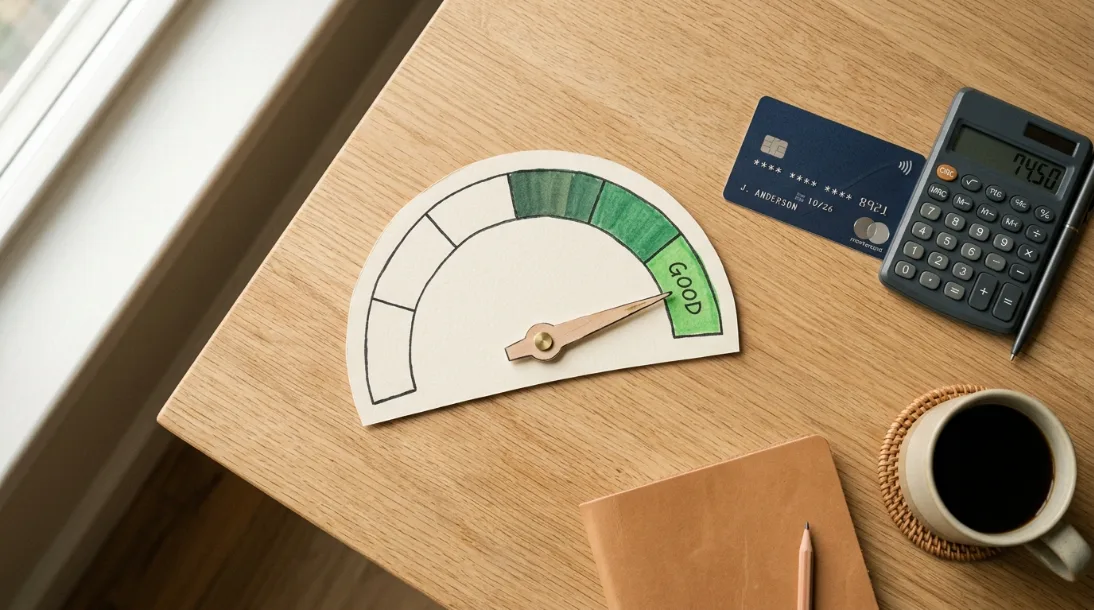
You would think paying off debt is always good news for your credit score. Mostly, yes. But if you have ever cleared a card and watched your score barely move, or even dip a little, you are not imagining it. Credit scores do not reward “less debt” directly. They reward specific behaviors, and paying off debt only helps your score when it changes one of those behaviors.
Here is what is actually happening under the hood.
The number that matters most: utilization
Credit utilization, how much of your available credit you are using, is the single biggest lever you control while paying off debt. FICO puts amounts owed at about 30% of your score, and utilization is the largest part of that. If you have a $5,000 limit and a $4,000 balance, you are using 80 percent of it, which reads as high-risk. Pay it down to $1,000, and utilization drops to 20 percent. That is the move that actually raises your score, not the act of “paying off debt” in the abstract.
This is why the debt avalanche or snowball both help your score as they work: every payment lowers utilization on whichever card you are targeting, even before the debt is fully gone.

Why your score can dip right after paying off debt
Two situations catch people off guard.
Closing the card. Paying off a card and then closing it can hurt your score two ways: it removes available credit, which can spike your utilization on everything else, and it can shorten your average account age over time. Keeping a paid-off card open, unused, usually helps more than closing it.
One big payment vs. steady payments. Scores are typically calculated from a snapshot of your balance on your statement date, not the moment you pay. If you clear a huge balance right before your statement cuts, you may not see the improvement reflected for a full billing cycle.
Your score reacts to the snapshot on your statement date, not the moment you hit pay. Give it a full cycle before you judge the number.

What people get wrong
Four beliefs that cost people money or points, and what is actually true.
Common beliefChecking your own score lowers it.
ActuallyChecking your own report is a soft inquiry and has no effect on your score. Only a hard inquiry, made when a lender assesses a new application, causes the small temporary dip.
Common beliefCarrying a small balance helps your score.
ActuallyIt does not. Scoring models reward low utilization, and a statement balance of zero on a card you use and pay off is fine. Carrying a balance to "build credit" just buys you interest.
Common beliefClosing a card you have paid off tidies up your credit.
ActuallyIt removes that card's limit from your available credit, which pushes your utilization up on everything else, and over time it shortens your average account age. An unused open card is doing quiet work.
Common beliefYou need to be in debt to have a credit score.
ActuallyYou need credit history, which is not the same thing. A card used for one small recurring bill and cleared in full every month builds history without ever carrying a balance.
What actually moves the needle fastest
- Get utilization under 30 percent, then under 10 if you can. This is the single fastest lever most people have.
- Never miss a minimum, even while focused on one debt. Payment history is the largest single factor, worth more than utilization.
- Leave paid-off cards open. An empty card with a long history is quietly helping your score sit there.
- Avoid new credit applications while paying off debt. Each hard inquiry causes a small, short-lived dip, and you do not need the extra noise right now.
A realistic timeline
Utilization changes show up fast, often within one to two billing cycles of the balance actually dropping. Payment history takes longer to build real weight, usually several months of on-time payments in a row before it meaningfully lifts your score. If you are three months into a payoff plan and the number has barely moved, that is normal. The habit is doing its job even when the score is still catching up.
The honest part
Chasing the credit score number while you are deep in debt is usually the wrong focus. The debt itself, and the interest it is costing you, matters more to your actual finances than a thirty point swing on a score you are not about to use for anything right now. Get the payoff order right first. The score improvement follows the debt reduction, not the other way around.
If you are not sure how much you can put toward debt each month without guessing, the 50/30/20 rule is the fastest way to find that number honestly.
The free One-Month Money Reset Kit gets you to the same number from the other direction, by tracking one real month instead of applying a percentage.
Frequently asked questions
Does paying off debt raise your credit score?
Usually, yes, mainly because it lowers your credit utilization, one of the biggest factors in your score. But the improvement is not instant. It typically shows up over one or two billing cycles after your balance actually drops.
Why did my credit score drop after paying off debt?
The most common reasons are closing the paid-off account, which can shrink your available credit and shorten your account history, or paying right before your statement date, which delays when the lower balance actually gets reported.
Should I close a credit card after paying it off?
Usually not. Keeping it open, unused, preserves your available credit and account age, both of which help your utilization and history. Only close it if the temptation to run it back up is too strong to manage otherwise.
What hurts your credit score more, high balances or missed payments?
Missed payments hurt more. Payment history is typically the single largest factor in your score. High utilization matters a lot too, but a missed payment causes deeper, longer-lasting damage.
How fast can I improve my credit score while paying off debt?
Utilization-driven improvements can show up within one to two billing cycles. A meaningful, durable score increase from consistent on-time payments usually takes a few months of steady behavior, not a single large payment.
One calm next step
Pull up your balances against their limits and calculate your utilization on each card. Anything above 30 percent is your priority, not necessarily your smallest balance or highest rate. Lowering that one number first is the fastest thing you can do for your score this month.
If a payment does slip through, Draftpace’s guide on what to do in the first 48 hours walks through the recovery steps in the same plain, no-drama way.
Free kit
The free One-Month Money Reset Kit has a debt-priorities page built in, so you can see exactly what is spare to put toward the balance that is hurting your utilization most.
Found this useful?
Pin it to come back to laterKeep reading
A few useful next steps
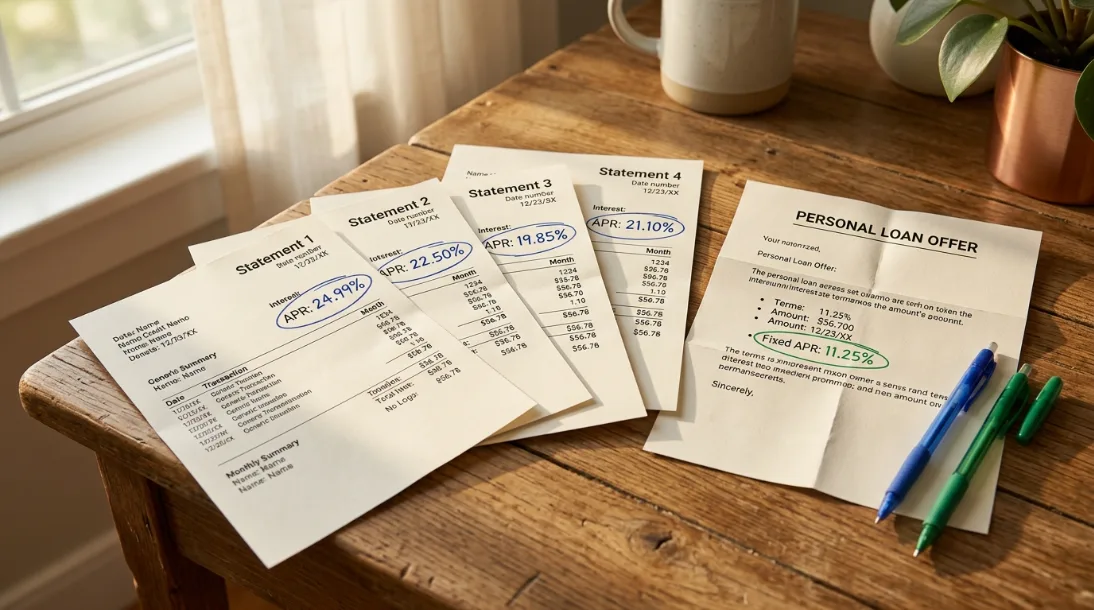
Debt Consolidation vs a Debt Payoff Plan: Which One Actually Saves You More?
Debt consolidation rolls your balances into one loan. A payoff plan just tells you what order to attack them in. Here is the real math on when each one wins.
Debt Snowball vs Avalanche: Which Payoff Method Actually Works?
The debt snowball saves your motivation. The avalanche saves your money. A side by side comparison with a worked example, and how to pick the one you'll finish.

How Interest Rates Change Your Debt Payoff Plan (and What to Do About It)
Rate checks have become a habit for a reason. What actually changes for your debt when rates move, and how to adjust your plan, not just watch headlines.