

How to Pay Off Debt on a Low Income (Without Giving Up Your Whole Life)
Paying off debt when money is tight, in steady, sustainable steps. How to free up room, pick a method you'll finish, and when income is the real fix.
Most debt advice is written for people with spare money. “Throw an extra few hundred at it each month.” When your income is tight, that advice lands like a joke, and worse, it makes you feel like getting out of debt is something only other people get to do.
It is not. Paying off debt on a low income is slower, but it is absolutely possible, and the approach is different in a way that actually helps. It is less about big payments and more about small, steady ones you can genuinely keep, plus a clear-eyed look at the one lever that changes the math.
Start with the smallest payment you can actually sustain
When money is tight, the instinct is to either ignore the debt or make a heroic payment one month and nothing the next. Both fail. The heroic month leaves you short, so you swing back to nothing, and the guilt builds.
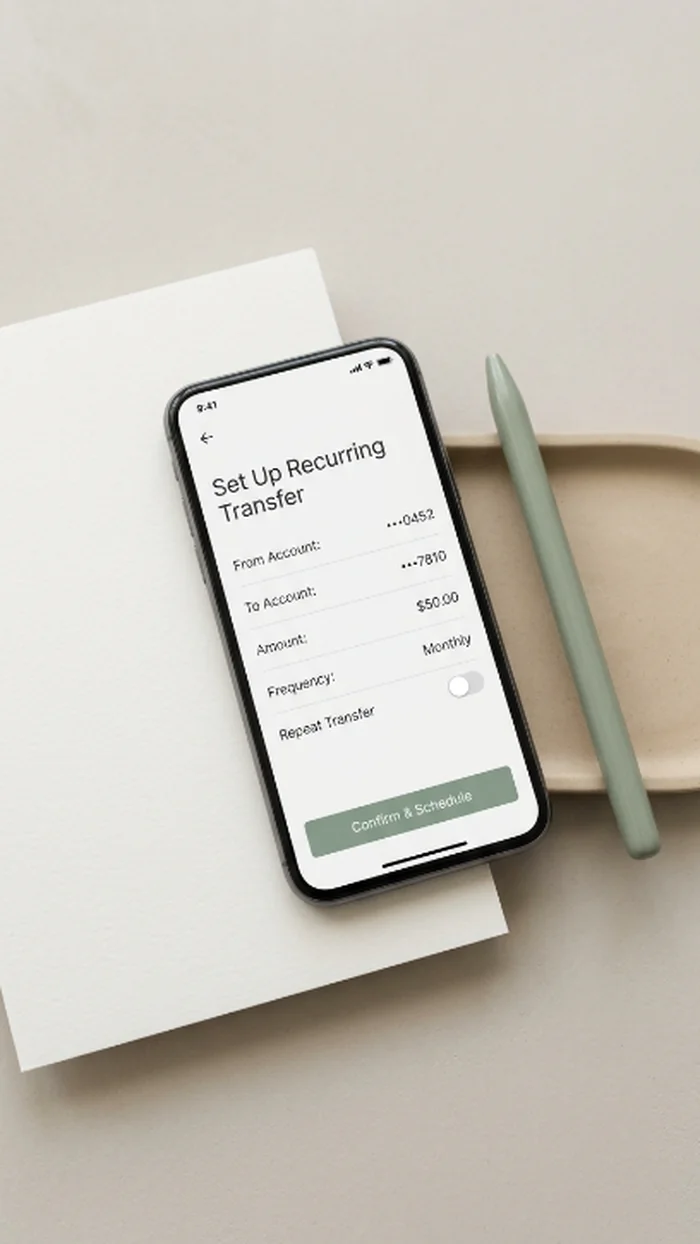
The better move is the opposite. Find the smallest extra amount you can pay every single month without fail, on top of your minimums, and automate it. Even a small extra payment, made reliably, chips the balance down and keeps the most important thing alive: momentum. A tiny payment you never miss beats a big one you cannot repeat.
Free up room before you find more willpower
The fastest way to find money for debt is not discipline, it is cutting a fixed cost once and redirecting it. A cancelled subscription or a renegotiated bill frees up money every month with no ongoing effort.
Work through the big levers in how to save money fast and the subscription audit. Whatever you free up, send straight to the debt. Found money is the easiest money to put to work.
What a small extra payment is actually worth
The advice to “pay more than the minimum” is easy to dismiss when there is no more to pay. This is what genuinely small amounts do to $3,000 at 24%, where the minimum is 1% of the balance plus that month’s interest.
| Paying | Clear in | Interest paid |
|---|---|---|
| Minimum only | 15.1 years | $4,802 |
| Minimum + $25 | 5.8 years | $2,016 |
| Minimum + $50 | 3.7 years | $1,302 |
| Minimum + $100 | 2.2 years | $773 |
The first $25 is the one that does the heavy lifting: it cuts nine years and $2,786 off. Going from $25 to $50 saves a further $714. The returns shrink as the number grows, which is the opposite of how this advice usually gets framed, and it is good news if $25 is all you have.
The reason minimum-only takes fifteen years is that the minimum falls as the balance does, so the payment shrinks just as fast as the debt. A fixed extra breaks that loop, which is why the amount matters less than the fact that it does not move.
Pick a method you will actually finish
With limited spare cash, motivation matters even more, because progress is slow and easy to abandon. That usually points to the debt snowball: pay the smallest balance first for a quick, real win, then roll that payment onto the next. The early victory is what keeps you going when the budget is tight.
The full comparison is in debt snowball vs avalanche, but on a low income, the method you stick with almost always beats the one that is mathematically optimal on paper.
A tiny payment you make every month beats a big one you make once. On a low income, consistency is the whole game.
Keep a tiny buffer, or the debt comes back
This feels backwards, but it matters. Before you throw everything at the debt, set aside a small starter fund, even a few hundred dollars. Without it, the next surprise goes straight onto a card, and the balance you fought down climbs again.
A small emergency fund is what stops the cycle. Keep making minimum payments while you build it, then shift focus back to the debt. If you are genuinely living paycheck to paycheck, build that buffer in tiny amounts first.

The honest part
Here is the truth that gentler guides leave out. If you have cut what you reasonably can and the numbers still do not leave room to pay more than minimums, the real lever is income, not effort.
That is not a personal failure. It is arithmetic. A small, sustainable side hustle, a raise, or extra hours can do more for your debt than any payoff order. And if the debt is genuinely unmanageable, free non-profit credit counselling exists in most countries and is worth looking into; the FTC’s guidance on coping with debt covers how to tell a legitimate counselling service from a debt-relief scam. There is no shame in getting help with the math. And where the gap is genuinely an income gap rather than a plan gap, the ways to earn more will move it faster than any payoff order will. This is general information, not personalised advice, so weigh it against your own situation.
For the practical side of finding that first spare amount, the free One-Month Money Reset Kit lays out one month of income, bills and leaks in one place.
Frequently asked questions
How do I pay off debt when I have no money?
Start with the smallest extra payment you can make every month without fail, and automate it. Free up room by cutting fixed costs like subscriptions, and send that money to the debt. If there is still nothing spare, the real lever is increasing income.
What debt should I pay off first on a low income?
Usually the smallest balance, using the debt snowball method, because the quick win keeps you motivated when progress is slow. Always keep paying the minimums on every other debt while you focus on one.
Should I save or pay off debt first when money is tight?
Build a small buffer of a few hundred dollars first, while paying minimums, so a surprise does not push you deeper into debt. Once that buffer exists, shift your focus to paying the debt down as fast as you sustainably can.
Can I really get out of debt on a low income?
Yes, though it is slower. Small, consistent payments add up, and freeing up fixed costs accelerates it. If the numbers truly do not work, raising income or seeking free credit counselling can change the picture more than willpower alone.
Is it worth making small extra debt payments?
Yes. Even a small extra payment made reliably reduces both your balance and the interest you pay over time, and it keeps your momentum alive. Consistency matters more than the size of any single payment.
Start this week
List your debts, their minimums, and their balances. Decide the smallest extra amount you can pay every month without fail, and automate it onto the smallest balance. Then cut one fixed cost and send that money the same way.
Free kit
Every dollar counts more on a low income. The free One-Month Money Reset Kit helps you see exactly where each one is going before you commit it to debt.
Found this useful?
Pin it to come back to laterKeep reading
A few useful next steps
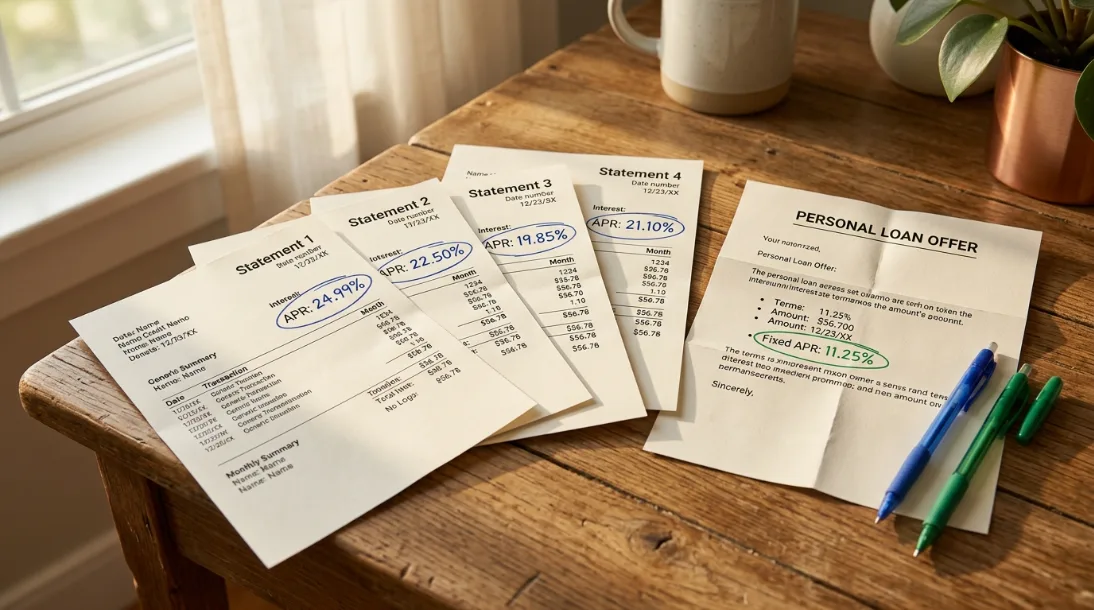
Debt Consolidation vs a Debt Payoff Plan: Which One Actually Saves You More?
Debt consolidation rolls your balances into one loan. A payoff plan just tells you what order to attack them in. Here is the real math on when each one wins.
Debt Snowball vs Avalanche: Which Payoff Method Actually Works?
The debt snowball saves your motivation. The avalanche saves your money. A side by side comparison with a worked example, and how to pick the one you'll finish.
Does Paying Off Debt Raise Your Credit Score? What Actually Moves It
Paying off debt does not move your score the way most people expect. What actually changes it while you pay, and why the number sometimes dips first.